Yesterday I received my negatives and prints of the continental market back from the photo lab. Although I had managed to capture the essence of the market I was a little disappointed with the results as I felt the images were a little dark.
As there are only three settings on the camera, there was a little bit of luck involved when I exposed the films and although I am please with learning a new skill I feel it is something that I may have to practice with a little more.
With regard to personal progression, I have been introduced to a whole new world of photography and it is something that I would like to focus on in the near future.
When at the market I also took several captures using my digital camera (Nikon D300) and have tweaked the RAW images in capture One Pro. It made me realise just how much easier it is to capture events using a digital camera as I could see the shots instantly. whereas in contract i could not with the film camera.
I was relatively happy with the shots I took on my Nikon and have decided to include several of the images in my series of final prints because it shows that I can use a range of mediums to document an event. I will be posting some of these onto my blog this week.
Sunday, April 18, 2010

Promotional material
For the personal development module we are required to produce creative and promotional material.I was quite excited about this task because I would get the chance to show how I wanted to be perceived as a photographer.
The first key element that I wanted to cover was to appear professional. The type of artwork, pictures and graphics used on promotional material can have an effect on the way both a company and individual is portrayed within the creative sector.
building a rapport with clients is important and before meeting a photographer face to face. They will usually look either on the persons website or have seen some of their promotional material.
Before starting the task of designing the promotional material I had a look at what was already on the market from competitors and other agencies. I spent quite some time looking at the different businesses and recognised one common trend, whether it was a sole trader, a micro business or a large agency. All of them had three ways in which they promoted their business which were posters, postcards and business cards.
Over the last couple of weeks I spent some more time thinking about what images I wanted to incorporate onto my material as this would reflect the type of work that I do. Currently, I so not specialise in any particular area of photography for example high end fashion or weddings, however I do want to become a recognised professional all rounder.
Because of this I decided that I would introduce different areas of photography onto my postcards including portraits, food, fashion and product photography. The main reason for this is to show that my skills are diverse and I can adapt for all clients. This became my second key point of focus to portray to industry.
Furthermore, I wanted my promotional material to have a theme. From personal experience I think that when information is sent out from a company that it should be instantly recognised almost as a form of branding. It is what the person stands for and helps to define the type of person that they are.
I also made the decision to keep the same colours and font styles for all of my promotional material, as I think this helps people identify with a company and will hopefully leave a lasting impression.
The first key element that I wanted to cover was to appear professional. The type of artwork, pictures and graphics used on promotional material can have an effect on the way both a company and individual is portrayed within the creative sector.
building a rapport with clients is important and before meeting a photographer face to face. They will usually look either on the persons website or have seen some of their promotional material.
Before starting the task of designing the promotional material I had a look at what was already on the market from competitors and other agencies. I spent quite some time looking at the different businesses and recognised one common trend, whether it was a sole trader, a micro business or a large agency. All of them had three ways in which they promoted their business which were posters, postcards and business cards.
Over the last couple of weeks I spent some more time thinking about what images I wanted to incorporate onto my material as this would reflect the type of work that I do. Currently, I so not specialise in any particular area of photography for example high end fashion or weddings, however I do want to become a recognised professional all rounder.
Because of this I decided that I would introduce different areas of photography onto my postcards including portraits, food, fashion and product photography. The main reason for this is to show that my skills are diverse and I can adapt for all clients. This became my second key point of focus to portray to industry.
Furthermore, I wanted my promotional material to have a theme. From personal experience I think that when information is sent out from a company that it should be instantly recognised almost as a form of branding. It is what the person stands for and helps to define the type of person that they are.
I also made the decision to keep the same colours and font styles for all of my promotional material, as I think this helps people identify with a company and will hopefully leave a lasting impression.
Monday, April 12, 2010
Lomography at the market
This weekend I received my 120mm film for my camera. By chance the Continental market just happened to be on and so I seized the opportunity to have a try with my new camera.
Loading the film proved to be slightly more difficult than first expected, however after some perseverance I managed it. The weather conditions were also ideal and I spent about two hours and three roles of film taking pictures.
As first experiences go I really enjoyed using the camera and film and tried suggested techniques like shooting from the hip so that people are not aware that they are being captured. It brought a degree of fun to the project and opened p a different angle to photography for me.
I have sent films off to be processed and cannot wait to see the results.
Loading the film proved to be slightly more difficult than first expected, however after some perseverance I managed it. The weather conditions were also ideal and I spent about two hours and three roles of film taking pictures.
As first experiences go I really enjoyed using the camera and film and tried suggested techniques like shooting from the hip so that people are not aware that they are being captured. It brought a degree of fun to the project and opened p a different angle to photography for me.
I have sent films off to be processed and cannot wait to see the results.
Thursday, April 8, 2010
Diana F+ and lomography
I was recently introduced to the wonderful world of Lomography and decided as I mentioned earlier in my blog to purchase a camera. It finally arrived today and I have also purchased some 120m XP2 film. I plan to go to the market tomorrow to have a trial run at using my new camera for my genres project. This style of photography is very new to me so I am excited to see what images I will be able to capture and see what effects I am able to achieve. In order to add another dimension to this project I have purchased some expired f120mm film in the hope that when processed the colours will be slightly warped.
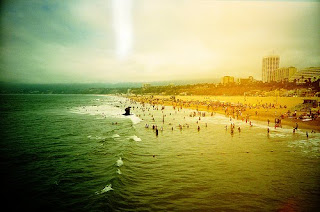
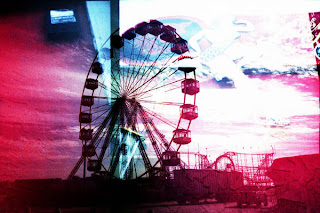

When looking at a lomography everything in the picture appears to be amplified and detail is enhanced. The saturation of colours appears a lot deeper, and the film gives a grainy effect and because of light leaks allows for a shadowy vignette that frames images. I have also bought a fisheye lens and plan to experiment with this to produce some interesting shots.


When looking at a lomography everything in the picture appears to be amplified and detail is enhanced. The saturation of colours appears a lot deeper, and the film gives a grainy effect and because of light leaks allows for a shadowy vignette that frames images. I have also bought a fisheye lens and plan to experiment with this to produce some interesting shots.
Brief for istock
I have decided that in order to stand the best chance of one of my images being accepted into the online image library that I will produce a number of different shots. I plan to shoot several food related shots, as well as corporate shots and finally some sports images.
This obviously will take a lot of planning and will be very time consuming and so like always my time management will be under pressure.
I want to create a range of shots that have different techniques for example the style of lighting used. Some I will shoot in natural daylight, others will be shot in studio with flash, tungsten or a combination of the two. I also plan to use a variety of angle and close ups within my selected images.
For the food shoot I want to shoot a variety of products using different backgrounds and props. I want to try and achieve 5-6 different shots and plan to shoot over several days to get the best that I can from my abilities and not rush the project.Because food photography takes some time, I have already planned what I will need and have started to assemble the props together. To ensure that the food is very fresh, I will buy it on the morning of the shoot and cook it in the studio kitchen. This will also take me quite sometime as I am fulfilling the role of a home economist as well as the photographer, and so I will have to factor this into my timing plan for the day.
This obviously will take a lot of planning and will be very time consuming and so like always my time management will be under pressure.
I want to create a range of shots that have different techniques for example the style of lighting used. Some I will shoot in natural daylight, others will be shot in studio with flash, tungsten or a combination of the two. I also plan to use a variety of angle and close ups within my selected images.
For the food shoot I want to shoot a variety of products using different backgrounds and props. I want to try and achieve 5-6 different shots and plan to shoot over several days to get the best that I can from my abilities and not rush the project.Because food photography takes some time, I have already planned what I will need and have started to assemble the props together. To ensure that the food is very fresh, I will buy it on the morning of the shoot and cook it in the studio kitchen. This will also take me quite sometime as I am fulfilling the role of a home economist as well as the photographer, and so I will have to factor this into my timing plan for the day.
Tuesday, March 23, 2010
New brief
This week we were given another brief in which we are to create 10 images for an online stock library. Looking at the brief I was at first a little overwhelmed as there was no direction or constraints on the type of images we needed to produce.
I decided to have a look at the type of images that websites such as shutter stock and istock already have. In doing this, I stumbled upon the do's and don't page. This proved to be insightful as it explained what images they were currently looking for and the type of images that they had a surplus of.
Examples of what they do not need:
Flowers
Flags
Close ups of eyes
Sunsets and clouds
immediate environment
Examples of what they do need:
Corporate shots
Groups and teams
Sports
Food and beverages - preferably with someone holding them
The websites also have strict rules about format and sizing of images along with a standard of quality. These are all things that I need to take into account when looking at what I am going to shoot for this brief. I have decided that as they have stipulated certain areas where they require images, I would use this to my advantage and produce a series of shots within these groups.
I plan to sit down within the next few days to narrow down what intend to shoot and plan how I am going to produce my shots. I am likely to need models especially if I am going to shoot a sport or corporate events. This I will have to factor into my time plan as the people I will need may have a tight schedule and only be available at certain times. This is something that I am now more knowledgeable of after completing the dancers shoot in the first semester. I also want to plan in at least one week where I will be able to retouch and finalise my image selection as I usually feel I do not leave enough time for this.
I decided to have a look at the type of images that websites such as shutter stock and istock already have. In doing this, I stumbled upon the do's and don't page. This proved to be insightful as it explained what images they were currently looking for and the type of images that they had a surplus of.
Examples of what they do not need:
Flowers
Flags
Close ups of eyes
Sunsets and clouds
immediate environment
Examples of what they do need:
Corporate shots
Groups and teams
Sports
Food and beverages - preferably with someone holding them
The websites also have strict rules about format and sizing of images along with a standard of quality. These are all things that I need to take into account when looking at what I am going to shoot for this brief. I have decided that as they have stipulated certain areas where they require images, I would use this to my advantage and produce a series of shots within these groups.
I plan to sit down within the next few days to narrow down what intend to shoot and plan how I am going to produce my shots. I am likely to need models especially if I am going to shoot a sport or corporate events. This I will have to factor into my time plan as the people I will need may have a tight schedule and only be available at certain times. This is something that I am now more knowledgeable of after completing the dancers shoot in the first semester. I also want to plan in at least one week where I will be able to retouch and finalise my image selection as I usually feel I do not leave enough time for this.
Genre photography plan
After having a look at many different genres I have finally decided that I am going to look at documentary photography in greater detail. I have many influences from photographers from Bill Brandt and Martin Parr to Brassai, Sebastiao Salgado and Dorethea Lange.
This specific genre of photography has a wide scope almost anything can be documented. I have decided to document Doncaster's market as it is local to me and also used to be a place thriving with activity. Ten to fifteen years ago people would travel from neighbouring towns just to visit the market and it is one of the things Doncaster is famous for. With the current economic climate and an increase in supermarkets, the trade is becoming harder to survive in.
I am hoping to capture this in some of my images and also get some candied shots of the everyday people that work on the stalls.
I have specifically purchased a Diana F+camera and several rolls of xp2 400 film. I have not shot using film for about 6 years and have only shot using 35mm. I have never used xp2 film before, so thought that this would be a good challenge and ideal opportunity to test a different format. I have also purchased a fisheye lens for and hope that I will be able to create some interesting shots.
As I mentioned before I am shooting at the marketplace. I want to give the impression that these shots were taken sometime ago, giving them a retro feel like that from the 60's era. I am hoping that when the film is developed it will produce some imperfections in the colour, as this sometimes happens when using C41 chemicals to process black and white film. Again this will help to ensure that the images look dated.
This specific genre of photography has a wide scope almost anything can be documented. I have decided to document Doncaster's market as it is local to me and also used to be a place thriving with activity. Ten to fifteen years ago people would travel from neighbouring towns just to visit the market and it is one of the things Doncaster is famous for. With the current economic climate and an increase in supermarkets, the trade is becoming harder to survive in.
I am hoping to capture this in some of my images and also get some candied shots of the everyday people that work on the stalls.
I have specifically purchased a Diana F+camera and several rolls of xp2 400 film. I have not shot using film for about 6 years and have only shot using 35mm. I have never used xp2 film before, so thought that this would be a good challenge and ideal opportunity to test a different format. I have also purchased a fisheye lens for and hope that I will be able to create some interesting shots.
As I mentioned before I am shooting at the marketplace. I want to give the impression that these shots were taken sometime ago, giving them a retro feel like that from the 60's era. I am hoping that when the film is developed it will produce some imperfections in the colour, as this sometimes happens when using C41 chemicals to process black and white film. Again this will help to ensure that the images look dated.
Subscribe to:
Posts (Atom)